
About Us
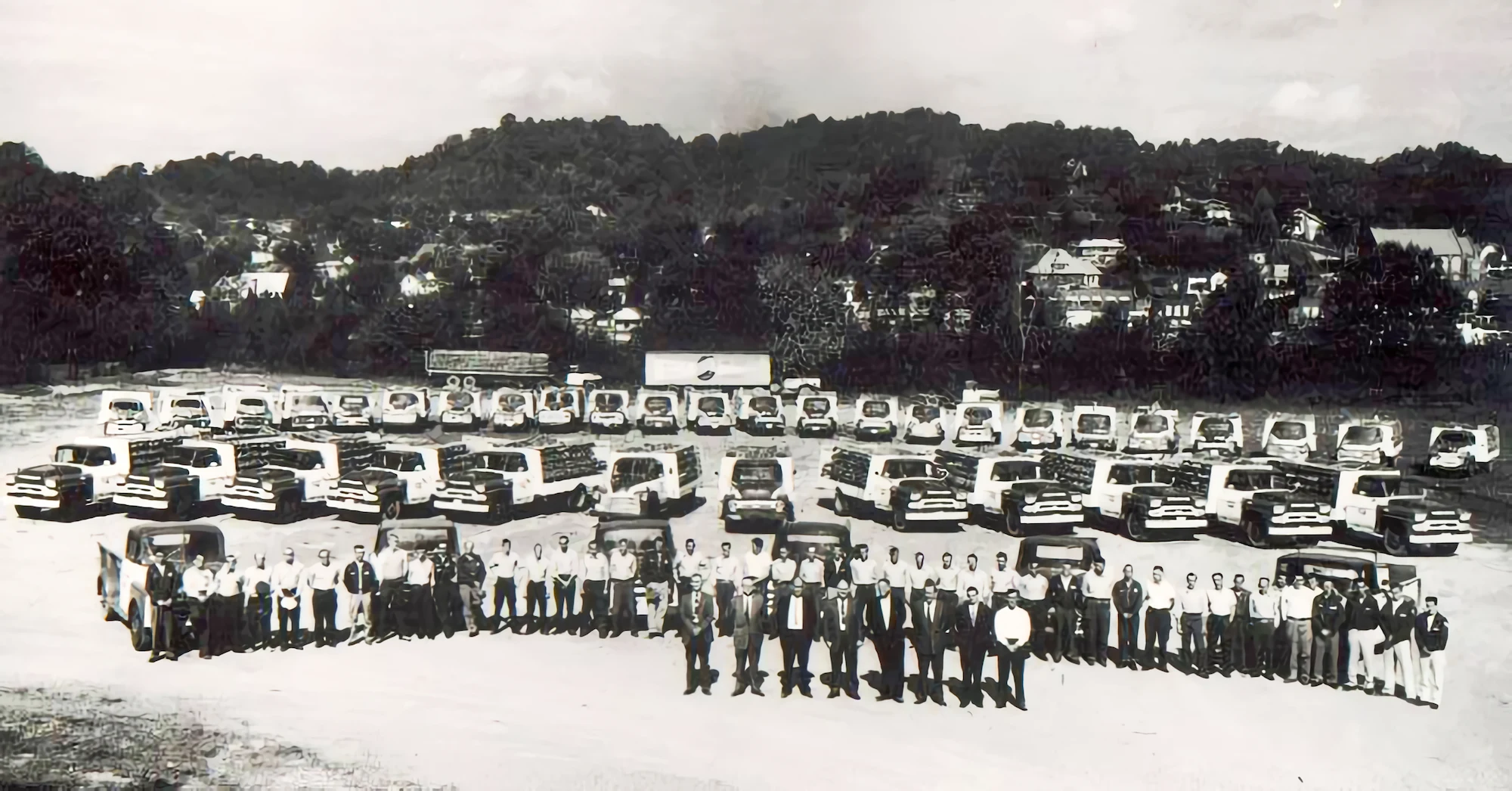
A Century of Bottling in Southwest Virginia
Pepsi Southwest Virginia has served the communities of Southwest Virginia for more than a century, growing alongside the region it calls home. What began as a small, locally owned bottling operation evolved into a trusted regional distributor, shaped by generations of leadership, industry change, and a deep commitment to local relationships.
The company’s story reflects the broader history of independent bottlers in Appalachia: resourceful, adaptive, and closely tied to the towns and industries they served. Through economic shifts, supply challenges, and changing consumer preferences, Pepsi Southwest Virginia remained grounded in one principle above all others: serving its communities reliably and responsibly.
Comprehensive Company History
1914
Pepsi Southwest Virginia traces its roots to the early twentieth century, emerging from the wave of small, locally owned bottling and ice operations that served the growing towns and industrial communities of Appalachia. The company was formally incorporated in 1914 as the T. M. Pepper Bottling Company, following earlier activity by the Pepper brothers. These early years reflected a common pattern of the era: experimentation with brands, shifting ownership, and close ties to local commerce.
February 7, 1923
On February 7, 1923, the business was reorganized and renamed the Stone Mountain Bottling Company. During this period, the operation produced and distributed a variety of beverages typical of independent bottlers at the time, including regional soda brands and flavor lines that predated modern consolidation. In the mid‑1920s, the Hunnicutt family became involved with the company, and the bottling plant quickly became part of daily family life, with successive generations growing up around the operation.
1930s
The 1930s marked a defining strategic shift. While the company had been successful bottling non‑cola beverages such as 7UP and Orange Crush, leadership carefully weighed whether to adopt a cola franchise, which was still considered a risk at the time. Acting on sound advice and long‑term judgment, the company secured the Pepsi‑Cola franchise, a decision that would shape its future. Pepsi branding became increasingly central to the business over the following decade.
1948
World War II and its aftermath brought significant challenges to independent bottlers. Rationing, supply constraints, and competitive pressures reshaped the industry nationwide. In 1948, Stone Mountain Bottling Company formally became the Pepsi‑Cola Bottling Company of Norton, Virginia, marking the company’s full alignment with the Pepsi brand and the beginning of a new chapter in its corporate identity.
That same year, leadership transitioned decisively within the Hunnicutt family when George E. Hunnicutt assumed control of the operation. What was initially intended as a short‑term arrangement became nearly five decades of stewardship. Under his guidance, the company navigated postwar growth, evolving distribution practices, and increasing competition, while remaining firmly rooted in Southwest Virginia.
1957
Throughout the mid‑twentieth century, the company expanded its service territory and brand portfolio through the acquisition of neighboring bottlers and franchises, including Dr Pepper and other non‑cola brands. These acquisitions were often undertaken to stabilize local markets and ensure continuity of service, rather than rapid expansion for its own sake. By 1957, operations had consolidated into a former bakery facility in Norton, Virginia, which would be expanded incrementally over time into a substantial bottling and distribution complex.
Early 1970s
One of the most consequential periods in the company’s history occurred during the sugar crisis of the early 1970s. As global commodity markets drove sugar prices to unprecedented levels and many bottlers failed, the company made the strategic decision to secure large sugar reserves ahead of the market. This foresight allowed operations to continue when others were forced to close or sell, preserving both jobs and local service during a volatile era.
Beyond its commercial role, the company became a cornerstone of the communities it served. It supported schools, youth sports, civic organizations, and charitable efforts throughout Southwest Virginia. During regional water shortages and infrastructure challenges, the bottling operation assisted municipalities by transporting potable water and lending equipment. These actions reflected a long‑held belief that a locally rooted business carries responsibility to its community as well as its customers.
1998
In 1998, leadership passed to George “Pedro” Hunnicutt Jr., who had grown up in and around the bottling plant and formally became president after decades of involvement. Under his leadership, the company continued operating as an independent, family‑owned bottler, emphasizing flexibility, personal relationships, and local decision‑making in an industry increasingly dominated by large, multi‑franchise operators.
2025
Following more than a century of family stewardship and with no next generation positioned to assume ownership, a carefully considered transition was undertaken. In 2025, Pepsi Southwest Virginia was acquired by Pepsi Bottling Company of Corbin, Kentucky, a fellow independent, family‑owned bottler with deep regional roots. The transition was structured to preserve local operations, retain employees, and ensure long‑term continuity of service across Southwest Virginia.
Today
Today, Pepsi Southwest Virginia continues its work as part of the Pepsi Bottling Company of Corbin organization. While ownership has evolved, the company’s foundational principles remain unchanged: dependable distribution, strong community relationships, and a commitment to serving Southwest Virginia with integrity, continuity, and local stewardship.
Contact Info & Service Area Information
Pepsi Southwest Virginia serves a defined territory across Southwest Virginia, supporting retailers, restaurants, schools, workplaces, and community organizations through locally based distribution operations.
Our Virginia service area includes the following counties:
- Buchanan County
- Dickenson County
- Lee County
- Russell County
- Scott County
- Tazewell County
- Wise County
Distribution and service operations are supported by two primary facilities:
- Pepsi Cola of Norton, Norton, Virginia
- Pepsi Cola of Cedar Bluff, Cedar Bluff, Virginia